Another great addition to the family.
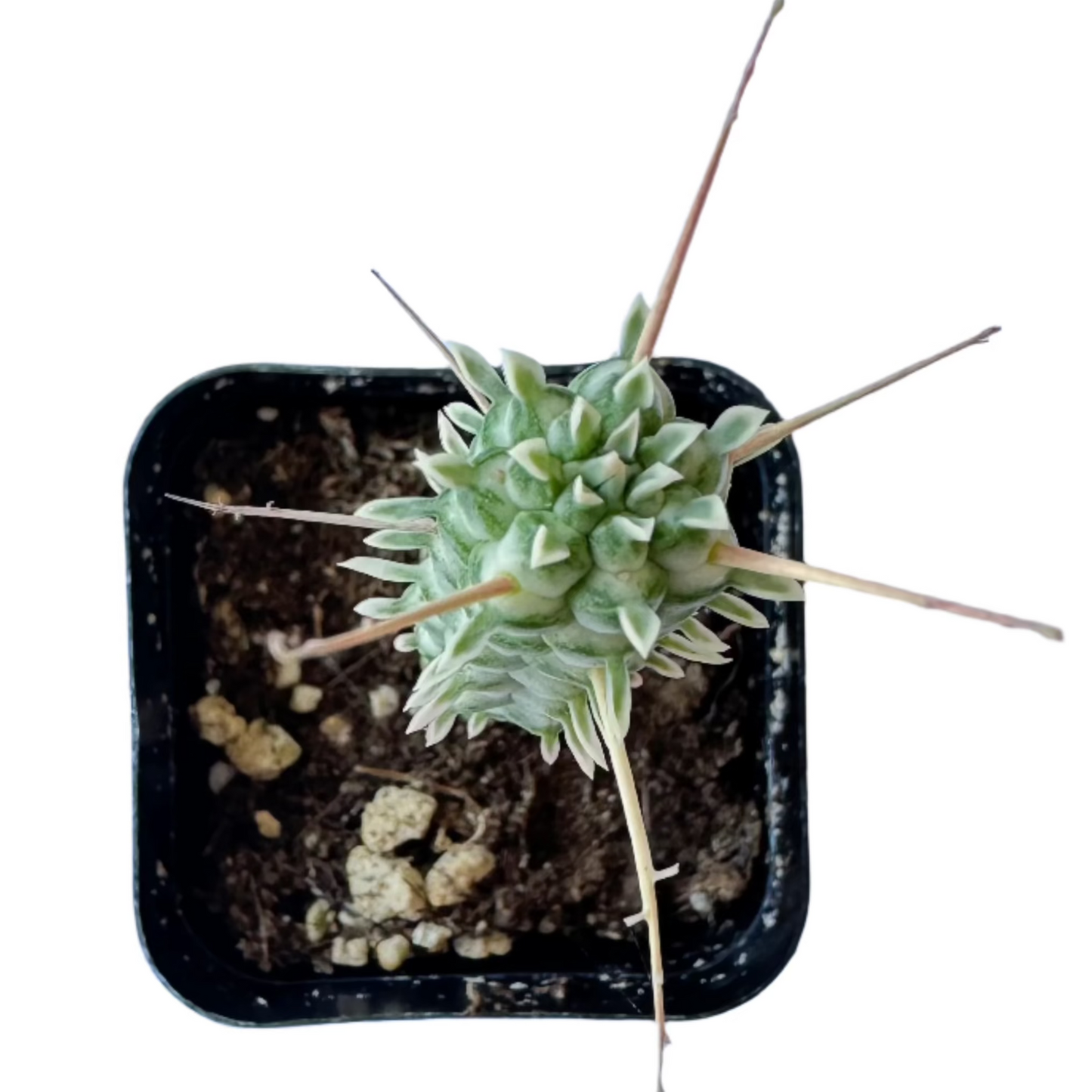
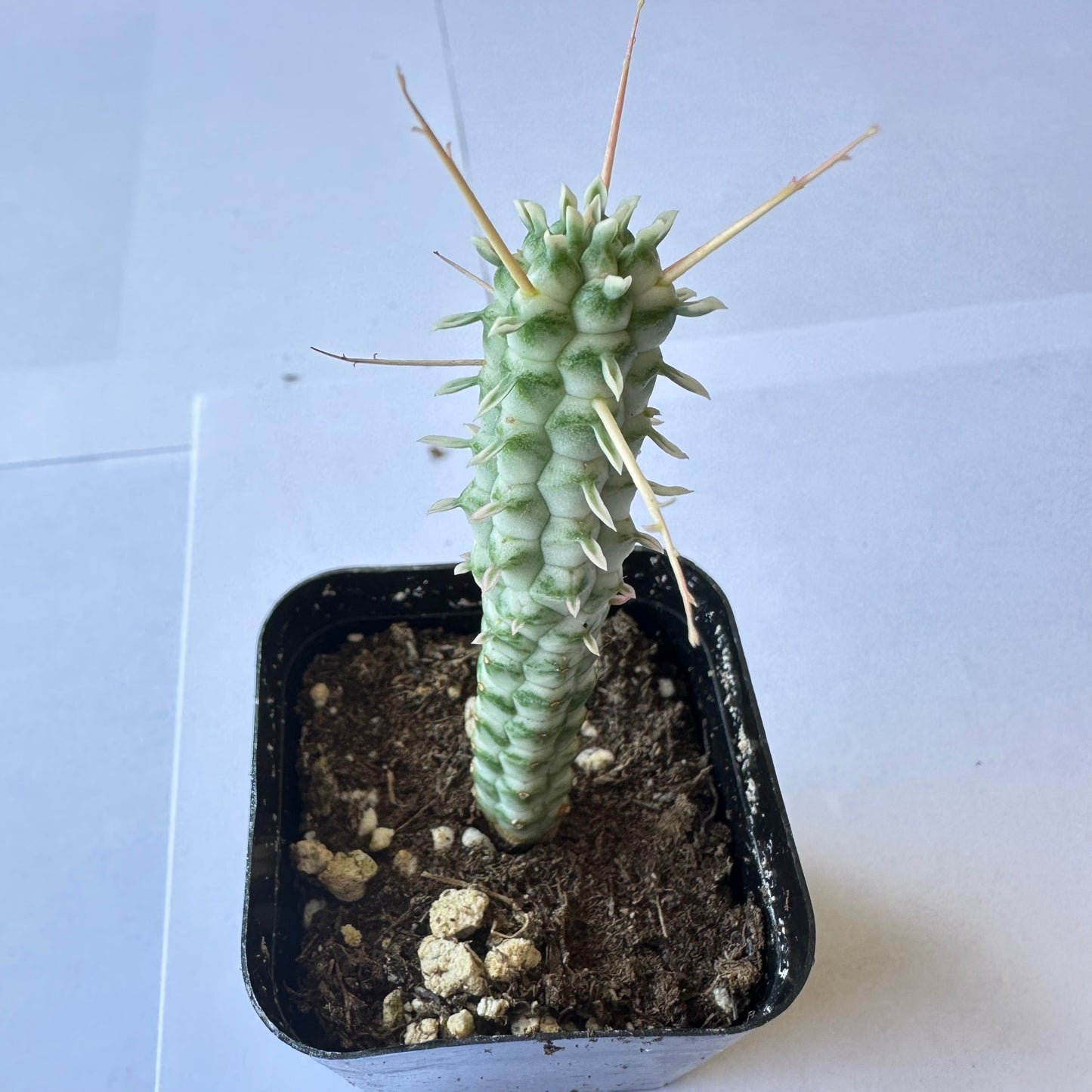
Indian Corn Cob Euphorbia, botanically listed as Euphorbia mammillaris f. variegata, is a live succulent plant selected for its distinctive form and ornamental appeal. Natural color, size, form, and presentation may vary slightly with season, maturity, and growing conditions.
Morphological Characteristics
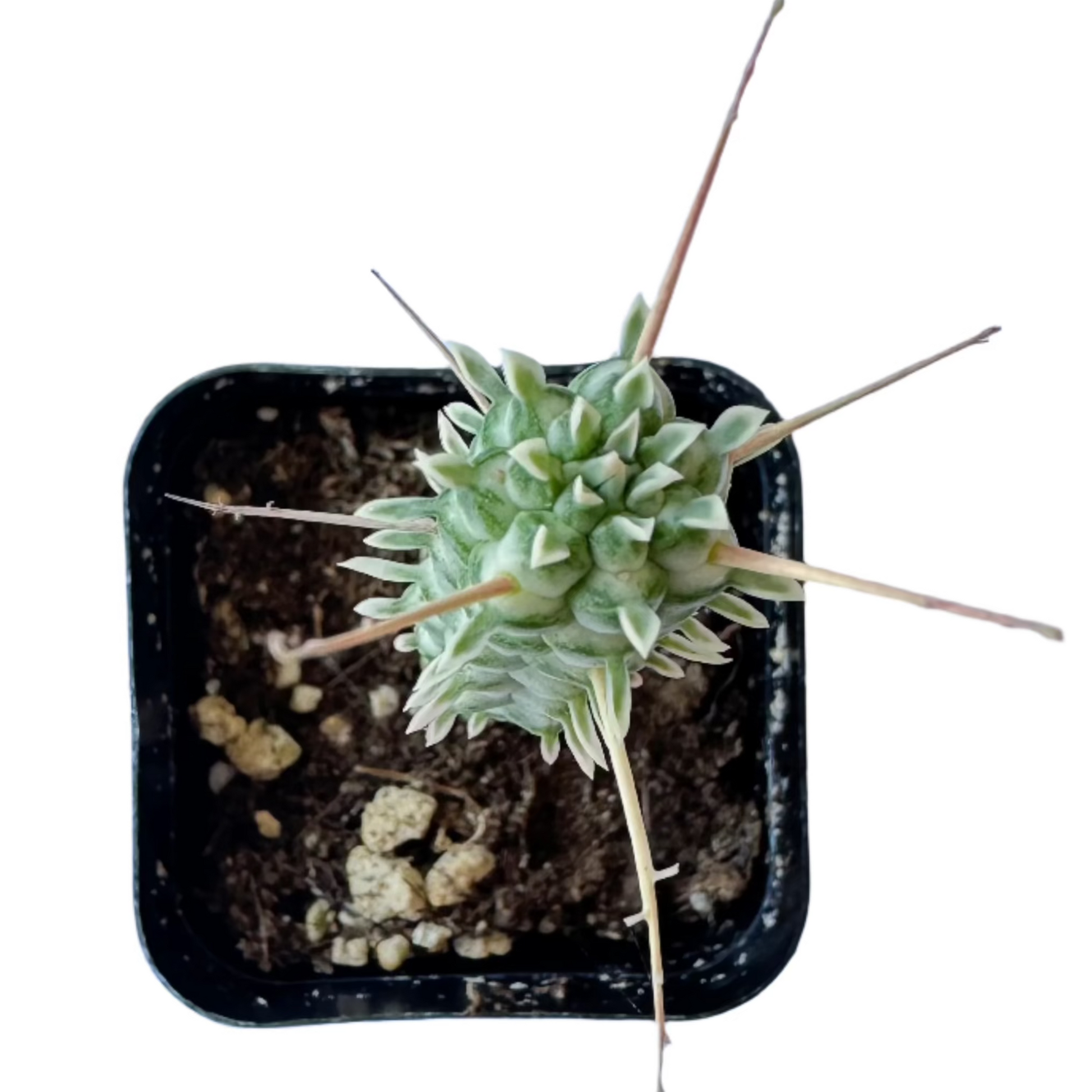
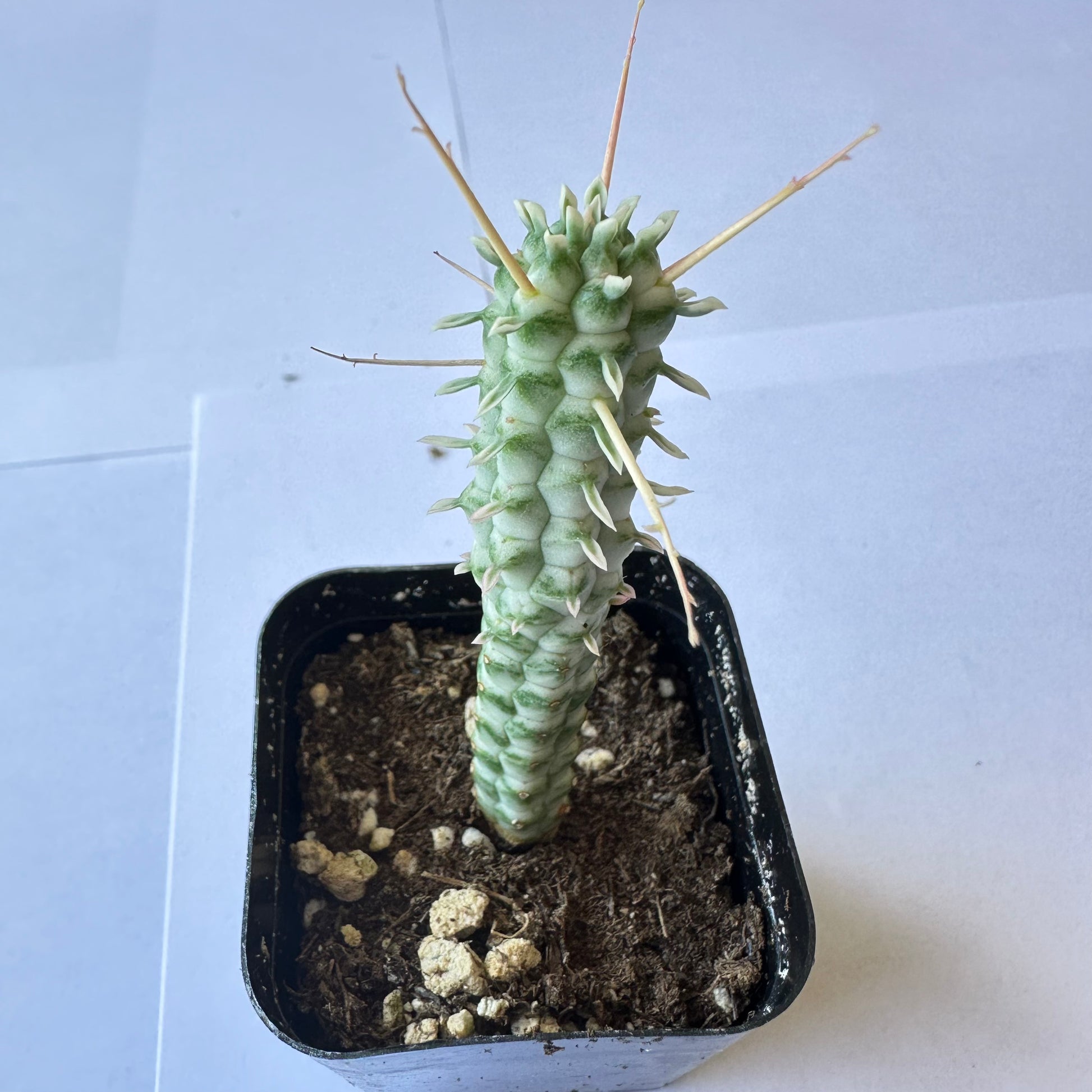
Euphorbia mammillaris f. variegata, commonly known as ‘Indian Corn Cob’, is a unique succulent belonging to the Euphorbiaceae family. This plant is noted for its striking, columnar stems that resemble small corn cobs. The stems are cylindrical and segmented, with prominent tubercles arranged in vertical rows. The variegated form displays a beautiful pattern of creamy white and green on the stems, enhancing its ornamental appeal.
Along the ridges of the stems, small, sharp spines may be present, and tiny, short-lived leaves can emerge from the tips of the tubercles. During the blooming season, ‘Indian Corn Cob’ produces small, yellow cyathia—the specialized flower structure characteristic of Euphorbias—at the tips of the stems.
Growth Habits
This succulent is a slow-growing plant that can reach up to 30 cm (12 inches) in height. It tends to branch at the base, forming clusters of upright stems over time. Native to South Africa, ‘Indian Corn Cob’ thrives in arid environments with well-draining, sandy soils. It is adapted to withstand periods of drought but is sensitive to overwatering and excessive moisture.
Maintenance Points
• Lighting: Prefers bright, indirect sunlight to full sun. Adequate light helps maintain the vibrant variegation and encourages healthy growth. In hot climates, providing some afternoon shade can prevent sunburn on the stems.
• Watering: Requires minimal watering. Allow the soil to dry out completely between waterings. Overwatering can lead to root rot and stem rot. During winter dormancy, reduce watering frequency significantly.
• Soil: Use a well-draining cactus or succulent potting mix. Incorporating perlite or coarse sand enhances drainage and mimics the plant’s natural habitat.
• Temperature: Ideal temperatures range between 15-25°C (59-77°F). The plant is not frost-tolerant and should be protected from temperatures below 10°C (50°F). In colder regions, it is best grown indoors or moved inside during the winter months.
• Fertilization: Feed sparingly during the growing season (spring and summer) with a diluted, balanced, water-soluble fertilizer once a month. Over-fertilization can harm the plant and should be avoided.
• Potting: Choose a container with drainage holes to prevent water accumulation. Terracotta pots are ideal as they allow excess moisture to evaporate, reducing the risk of overwatering.
• Handling: Be cautious when handling the plant due to its spines and the toxic sap it produces.
Reproduction Method
Euphorbia mammillaris f. variegata can be propagated through stem cuttings and seeds.
1. Stem Cuttings:
• Preparation: Wear gloves to protect your skin from the toxic sap. Use a clean, sharp knife to cut a healthy stem segment.
• Callusing: Allow the cutting to dry for several days until the cut end forms a callus and the sap has stopped oozing.
• Planting: Plant the callused end into well-draining soil.
• Aftercare: Place the cutting in a warm location with bright, indirect light. Water lightly after a few days and then sparingly until roots establish.
2. Seeds:
• Collection: Harvest seeds from mature plants if available.
• Sowing: Sow seeds on the surface of a well-draining soil mix without covering them deeply.
• Germination: Keep the soil slightly moist and place the container in a warm area with indirect sunlight. Germination may take several weeks.
• Transplanting: Once seedlings are large enough to handle, transplant them into individual pots.
Additional Tips
• Safety Note: The sap of Euphorbia plants is toxic and can cause skin irritation or allergic reactions. Always wear gloves and protective eyewear when handling the plant or taking cuttings. Avoid contact with eyes and mouth, and keep the plant away from children and pets.
• Pest Control: Monitor for pests such as mealybugs and spider mites. If infestations occur, treat the plant promptly with insecticidal soap or neem oil.
• Pruning: Remove any dead or shriveled stems to maintain the plant’s appearance and prevent potential pest issues.
• Air Circulation: Ensure good air flow around the plant to reduce the risk of fungal diseases, especially in humid environments.
• Overwintering: In regions with cold winters, indoor cultivation during colder months is recommended to protect the plant from frost damage.
By providing appropriate care and attention, ‘Indian Corn Cob’ can be a striking and low-maintenance addition to your succulent collection, offering unique texture and visual interest to both indoor and outdoor garden spaces.
Plant Care Guide
Light
Bright Indirect to Full Sun
Water
Low Water Needs
Difficulty: Easy — great for beginners
Note: It's normal for succulents to appear slightly shriveled after shipping. They usually recover within a few days in a suitable environment.
Ships from California
Orders ship within 1–2 business days, Monday through Friday.
Packed with care
Plants are wrapped, cushioned, and protected for the trip.
Tracking included
You will receive tracking as soon as your order is on the way.
Live-Arrival Guarantee
- Contact us within 48 hours of delivery with photos of the plant and packaging.
- We will review each case and help with a replacement, credit, or refund.
- Minor shipping stress (a few dry leaves, light soil shift) is normal and recovers quickly.
Returns & Refunds
Due to the perishable nature of live plants, we are unable to accept standard returns. If your order arrives damaged, please use our Live-Arrival Guarantee above.
View refund policy →View full shipping information →
Questions? support@seah.co