
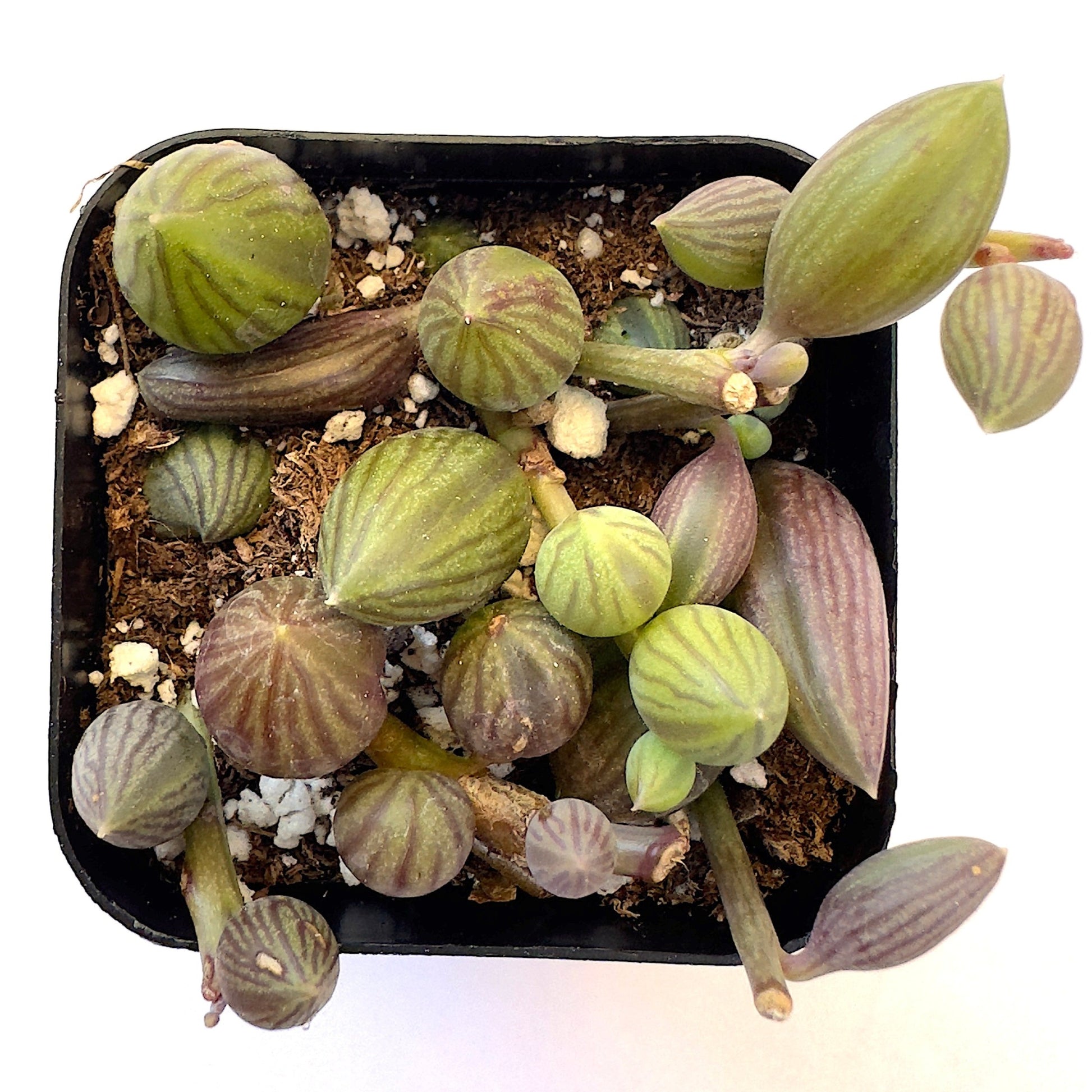
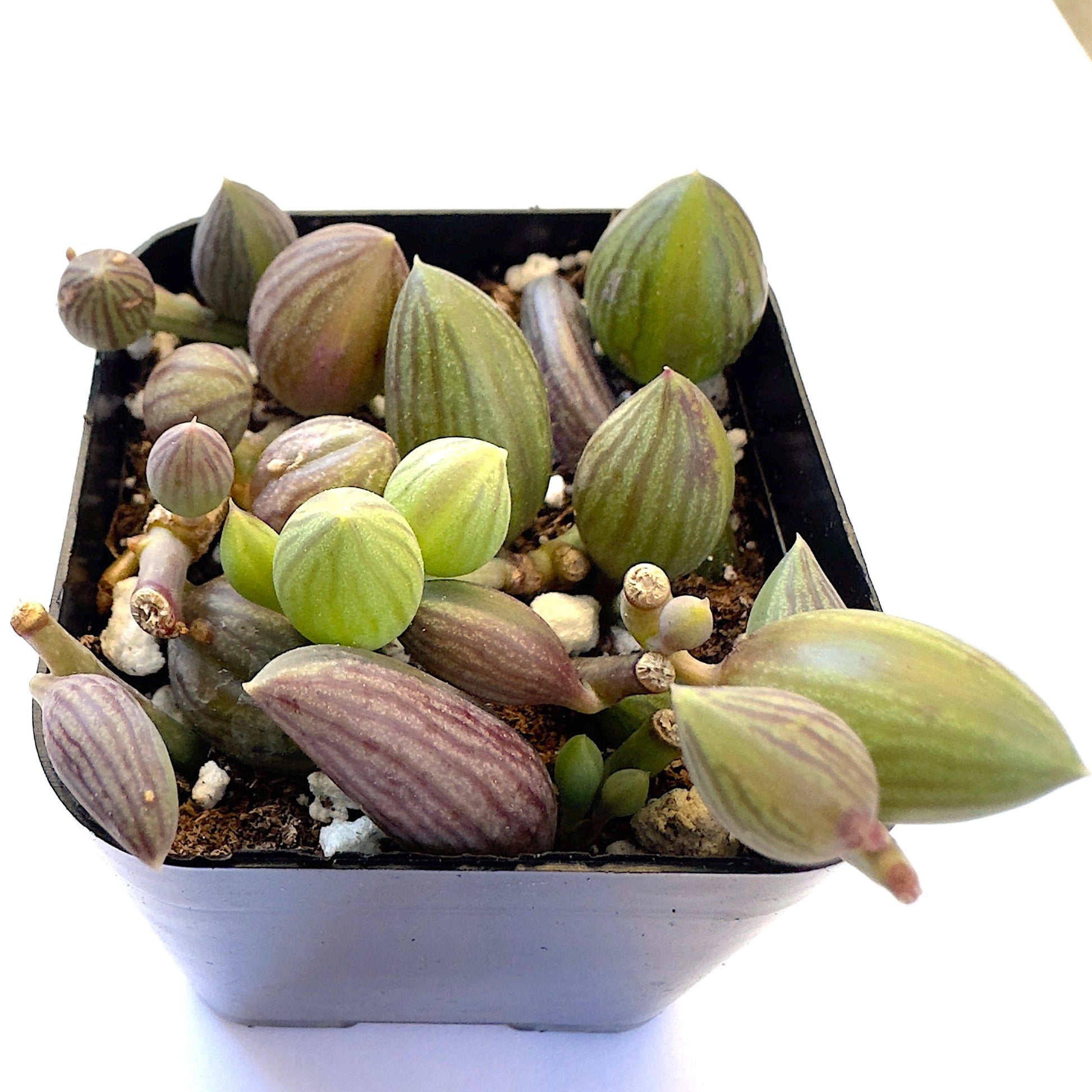

I ordered the 4 inch string of watermelon but it was not 4 inches when it arrived and it's pretty much half dead upon arrival. It's unfortunate.
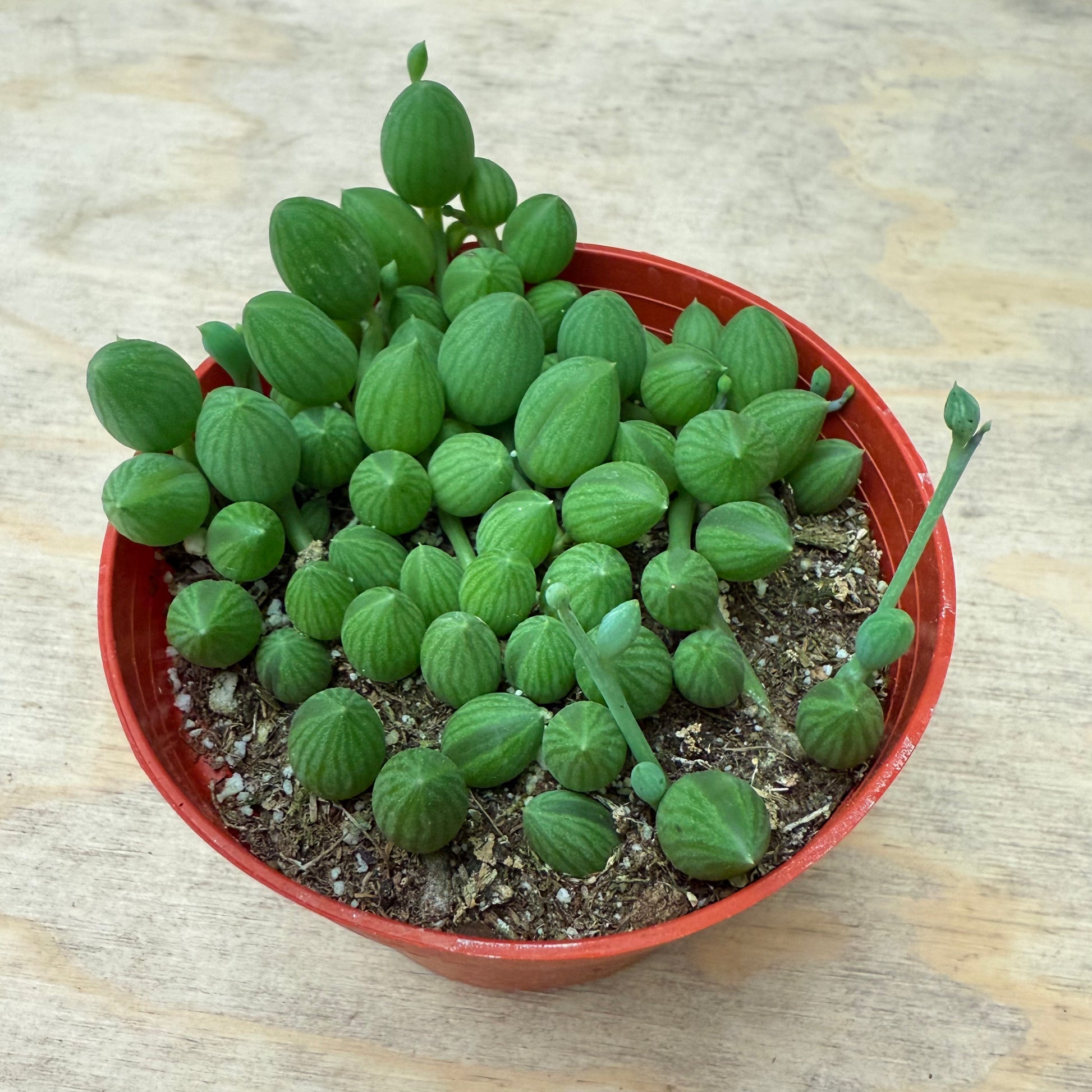
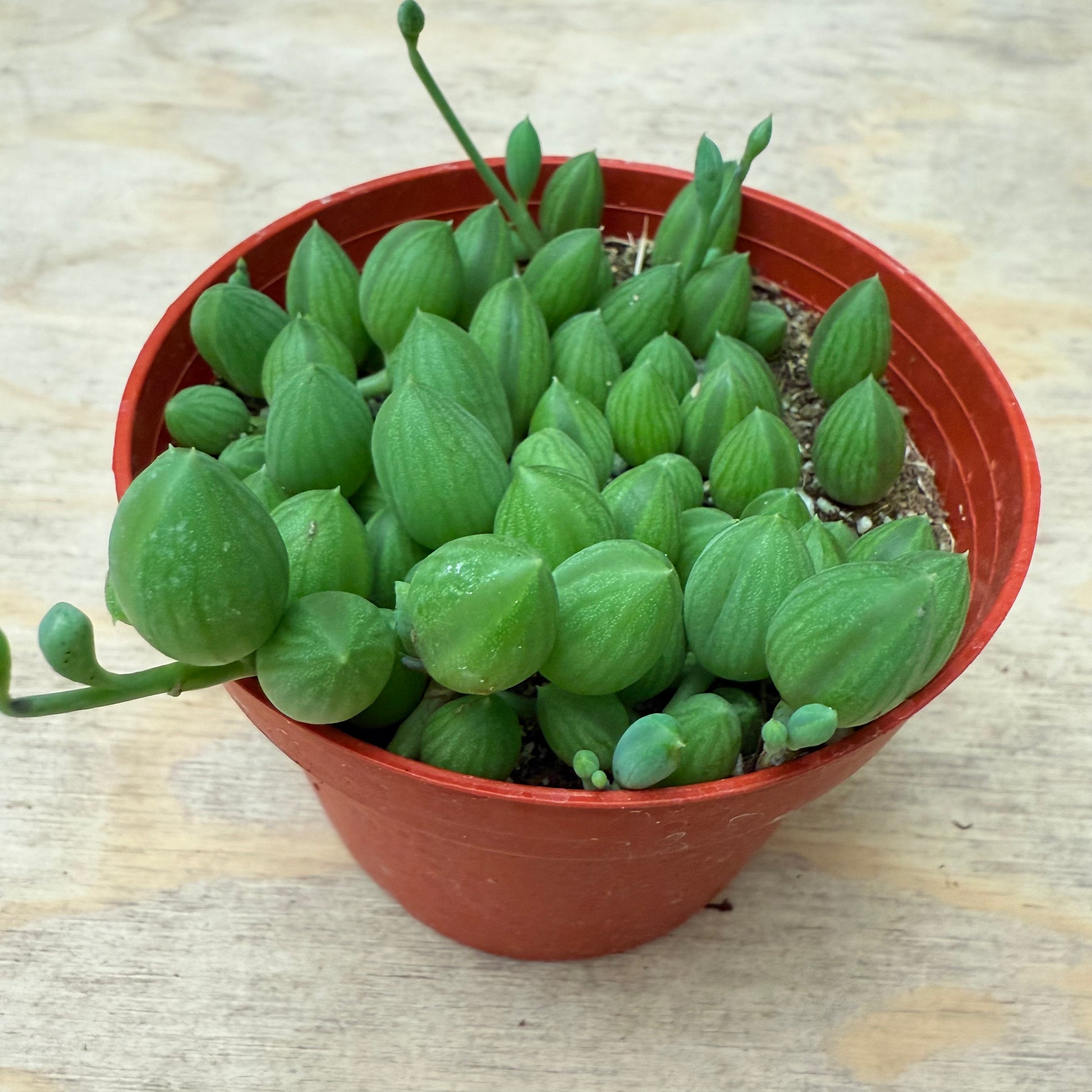
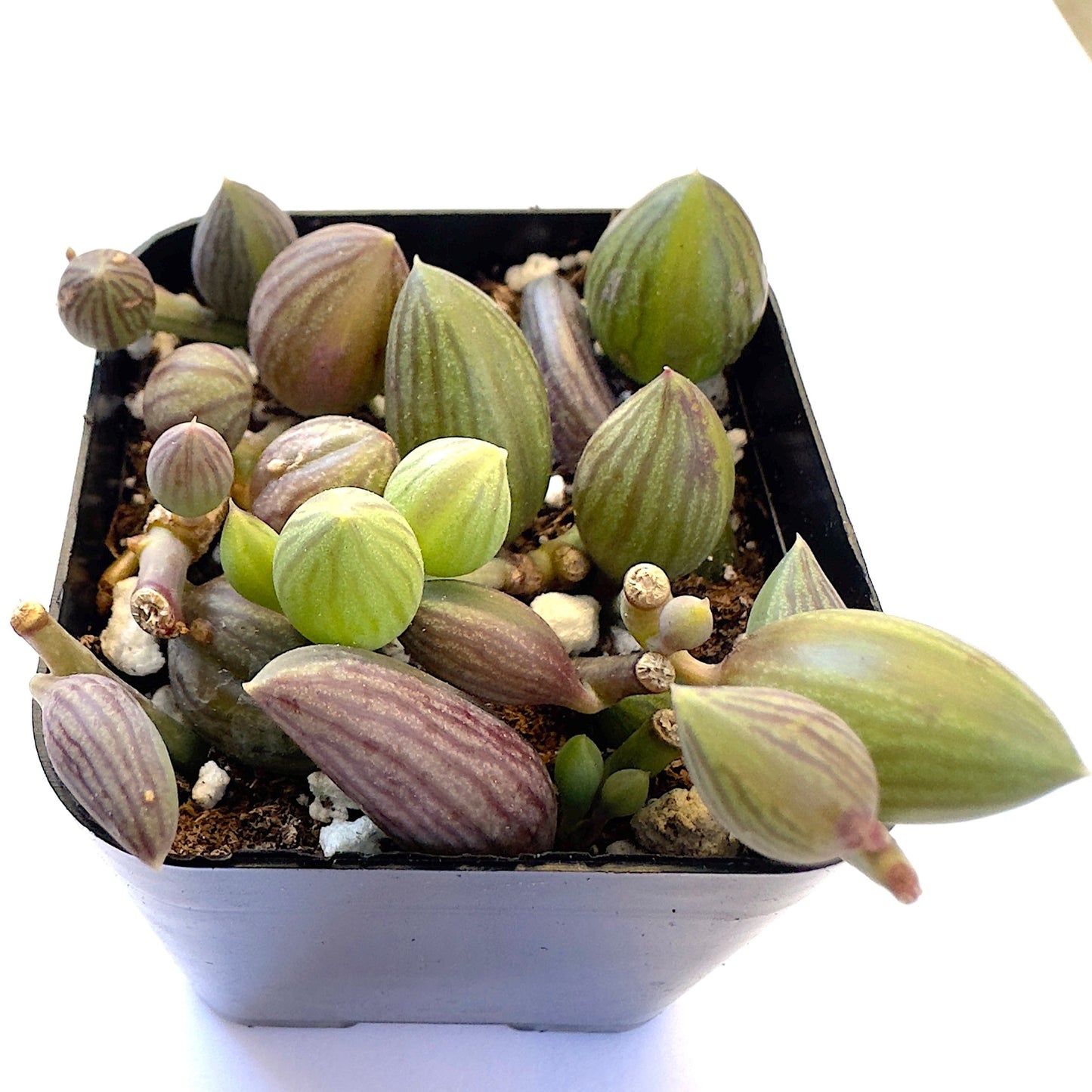
String of Watermelon, botanically listed as Senecio herreianus, is a live succulent plant selected for its distinctive form and ornamental appeal. Natural color, size, form, and presentation may vary slightly with season, maturity, and growing conditions.
Senecio herreianus, commonly known as String of Watermelon, is a charming and unique succulent that belongs to the Asteraceae family. This decorative plant is popular among houseplant enthusiasts due to its distinctive appearance and relatively easy care. Here’s a detailed description of its morphological characteristics, growth habits, maintenance points, and reproduction methods.
Senecio herreianus is a delightful addition to any indoor garden, adding a touch of whimsy with its watermelon-like foliage. With proper care and occasional propagation, it can provide endless enjoyment and even become a conversation starter due to its unique appearance.
Note: It's normal for succulents to appear slightly shriveled after shipping. They usually recover within a few days in a suitable environment.
Due to the perishable nature of live plants, we are unable to accept standard returns. If your order arrives damaged, please use our Live-Arrival Guarantee above.
View refund policy →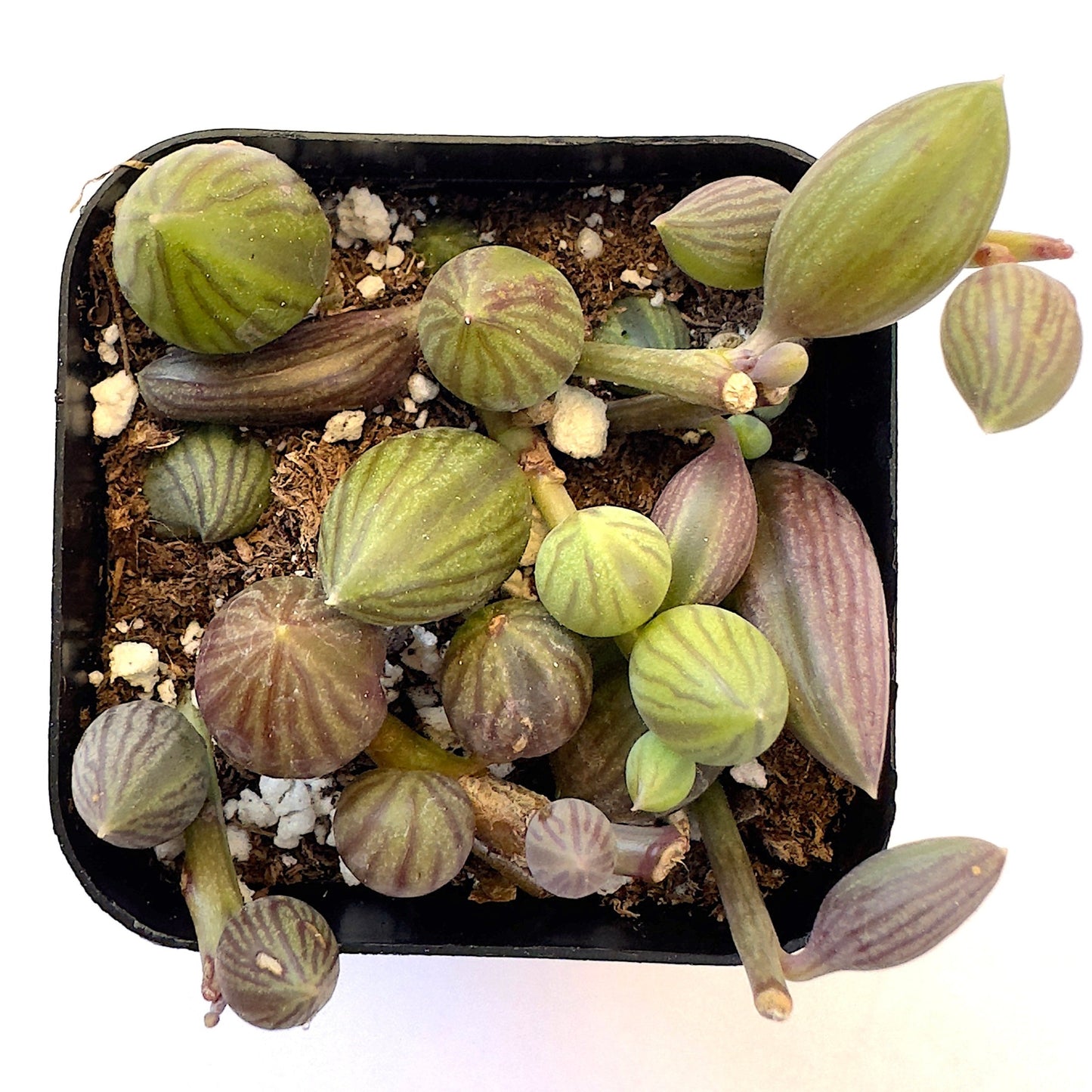


Overall rating: 4.8 / 5 from 32 reviews.
I ordered the 4 inch string of watermelon but it was not 4 inches when it arrived and it's pretty much half dead upon arrival. It's unfortunate.

Fast delivery. Arrived in perfect condition even though it was delivered to Alaska.

The little watermelons are so cute and are already making more. I got these because my husband grows watermelons. He loves them too. Sherry McCasland

The plant was well packaged and super sized. Very full and healthy. The plant looked just like item photo on the website. I couldn’t be more pleased!

I’ve been wanting one of these plants for awhile so I was disappointed when it didn’t survive the shipping very well. The shredded paper packaging was smashed onto it and most of the leaves were either broken or shriveled. I’m giving it TLC and can hopefully bring it back to good health.

Such an adorable succulent that actually looks like a watermelon

Its so cute!! Super healthy

Gorgeous healthy little plant. Excited to see how it continues to grow

Very cute and healthy plant. It arrived very well packaged and is thriving.

Beautiful little plant!!! It’s already growing new watermelons!! 🍉
Loved what you sent the plant I s healthy and thriving I love him I take very good care of my plants its my hobby you made my collection of unique succulants grow id order again and recommend you to new customers . You sent I t quick and had good safe packaging . I recommend your store to others ill be ordering more please send me emails of any new ads you have I love buying plants. Thank yo I so much you guys rock . J musser
Excellent specimen good health packed well
This arrived in good condition and looked like the picture. I am very pleased ti it.
Pretty plant in great condition. Fast shipping and great price. I would be happy to buy from seller again.
The plant arrived in excellent condition. I would gladly recommend you to anyone who wants a plant.
Arrived in perfect healthy — thanks
Arrived perfectly and no shipping damage.
Arrived in great shape, they packaged it well for the colder Midwest weather delivery. It is growing happy under my grow lights in the basement and doing well.
Now is a difficult time for these little plants to travel in mail with the weather cold. You packaged my small plant so well that it looks strong and well. Thank you for taking the time to package the plant so carefully.
Not interested
String of watermelons arrived perfectly wrapped and healthy! Can't wait to order from them again!
Shipped fast it is very nice and good size. Thanks. I love it!
Beautiful!!! So healthy, better than I expected.
Came quickly. Cute little plant.
String of Watermelon – Senecio herreianus (2-inch pot) arrived healthy and well-packed. The plant is full, vibrant, and already trailing nicely. Excellent quality and exactly as described—highly recommend!
Growing great. Packaged very well.
I've never seen this plant before so when I saw it on here I definitely was interested. It's pretty cool 🥰
Good
They arrived in great shape. A very large plant and healthy looking. Love them
Healthy plant arrived quickly. It seems to be thriving in it's new home!
Great watermelon plant. Arrived on time and in great condition
Item was packed very well. Fast shipper Highly recommended seller.